

What Makes Bathroom Flooring Last in a Busy Home
The best bathroom flooring for a busy Dublin home is one that is fully waterproof, gives reliable grip when wet and keeps its finish under daily wear. Porcelain tiles and quality luxury vinyl suit most households, provided the floor beneath is prepared and sealed correctly.
This guide explains how each material copes with water, footfall and cleaning, what to check before you buy and how the floor interacts with the rest of the room. You can also see bathroom floor finishes in our showrooms before you decide.
How Daily Wear Affects a Bathroom Floor
A bathroom floor takes more punishment than most people expect. It meets wet feet several times a day, steam every morning, cleaning products every week and the occasional dropped bottle or razor. Across a family household that adds up to thousands of small impacts and wet-and-dry cycles each year.
A durable floor therefore needs to do four things. It must stop water reaching the subfloor, resist scratching and staining, stay safe underfoot when wet and clean easily without special products. A floor that is beautiful but fails on any one of these points will look tired long before the rest of the bathroom does.
Water and Steam
Water is the main enemy. It finds its way through failed grout lines, silicone gaps and the edges of a floor where it meets the bath, shower tray or door threshold. Over time it swells timber subfloors and loosens adhesive. This is why the floor surface is only half of the job, and why we always treat waterproofing as part of the renovation. Our article on why waterproofing matters in every bathroom renovation covers that in detail.
Foot Traffic and Cleaning
Floors in family bathrooms and en-suites are cleaned often. Surfaces with deep texture or lots of grout lines hold dirt, while very smooth glossy finishes show every water mark. The right choice balances grip with easy cleaning, and it should still look good after years of mopping, wet towels and the weight of a full bath or vanity unit.
Think also about who uses the room. A busy family bathroom, a guest en-suite and a small cloakroom wet area all wear differently, so the best bathroom flooring for one may be more than you need in another. Matching the material to the level of use avoids overspending on one room and under-specifying another.
Porcelain Tiles for Durable Bathroom Flooring
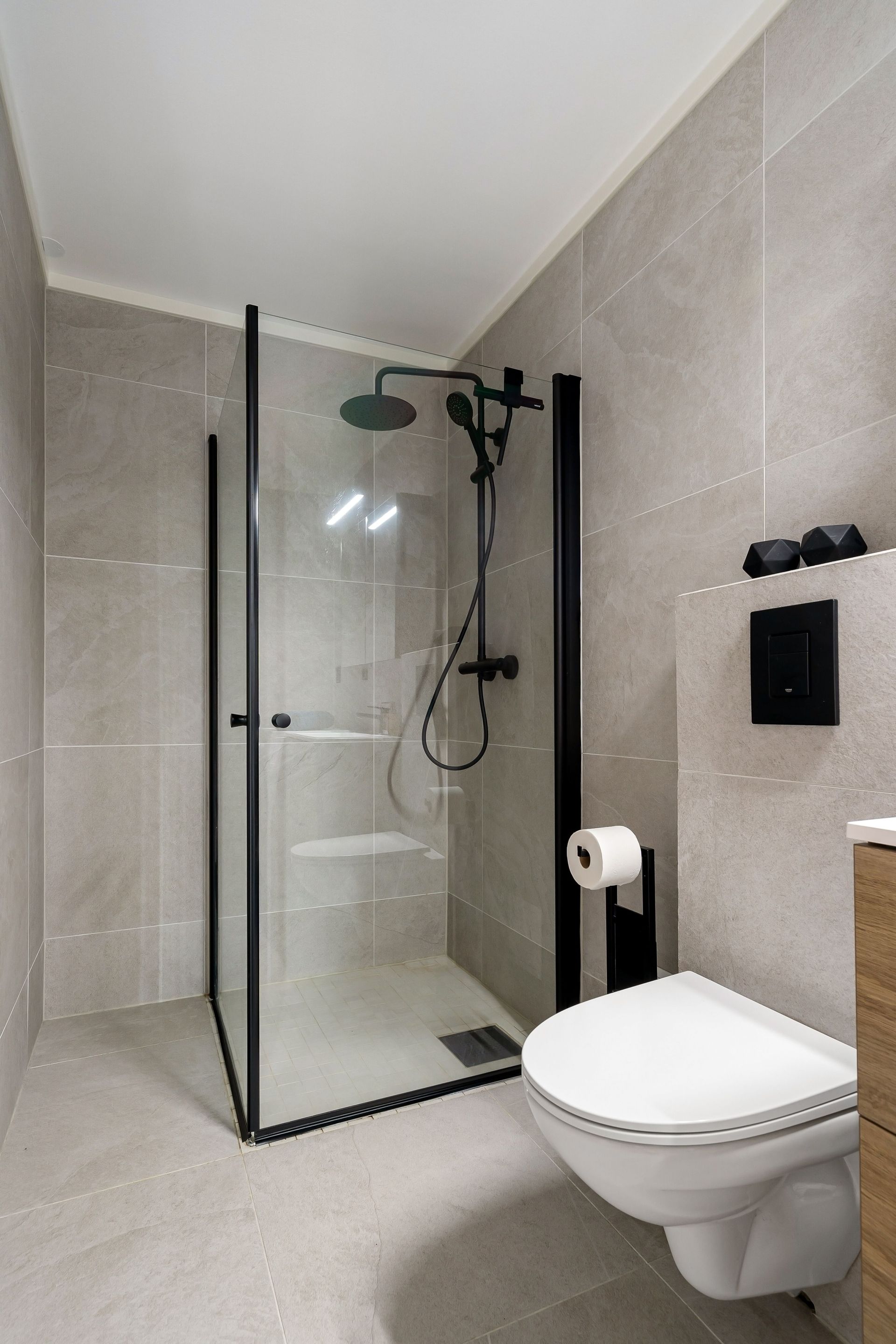
Porcelain remains the most dependable choice for durable bathroom flooring. It is dense, absorbs very little water and stands up well to scratches, stains and household cleaners. It is also available in a wide range of looks, including stone, concrete, timber and patterned designs, so durability does not mean a plain finish.
Porcelain does have a few points to weigh up:
- Tiles are cold underfoot unless you add underfloor heating, which suits tiled floors very well.
- Grout lines need sealing and occasional cleaning, and larger tiles with narrower joints reduce the amount of grout to maintain.
- Polished finishes can be slippery when wet, so a matt or textured surface is the safer choice for a floor.
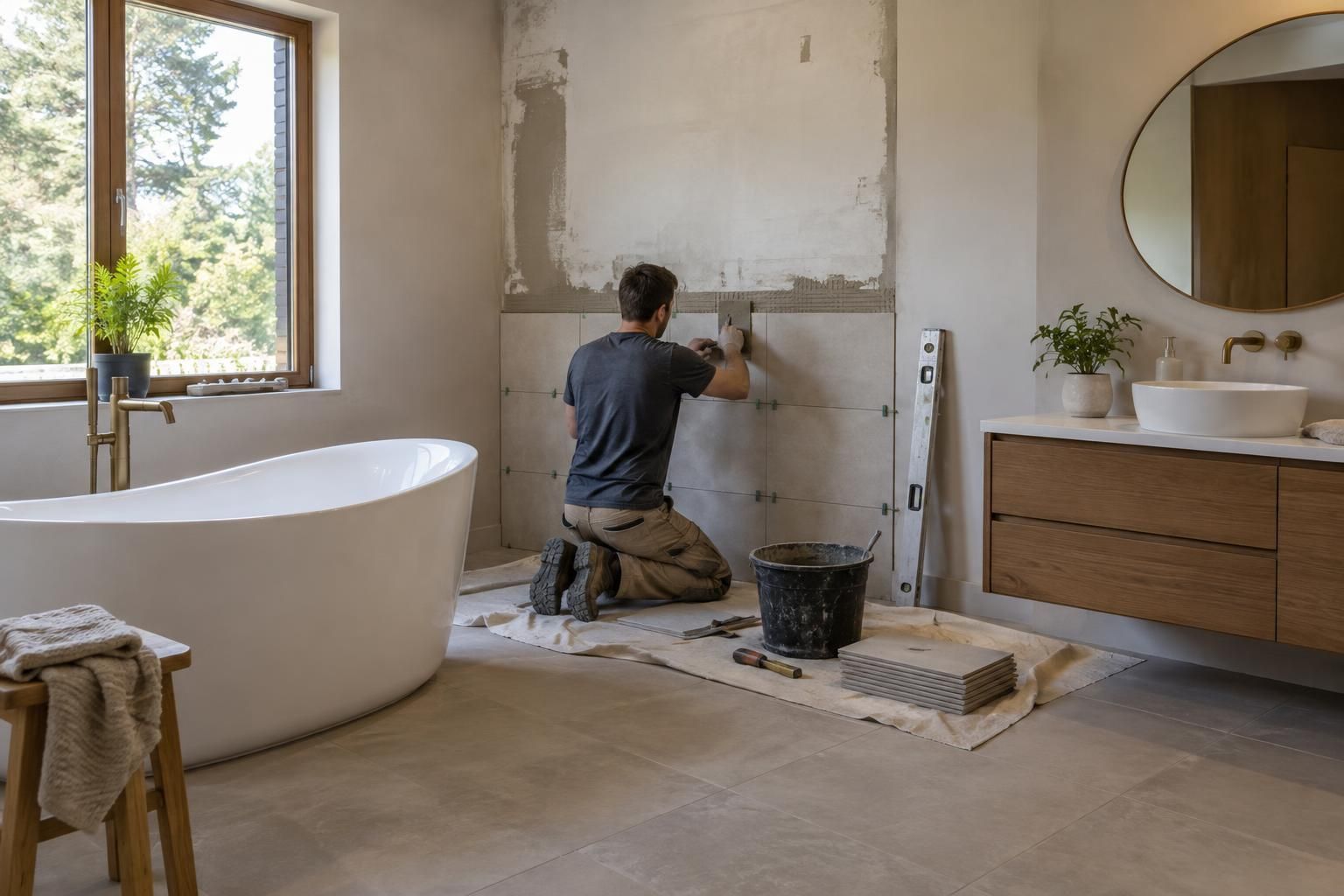
- Tiling needs a flat, stable base, and uneven floors must be levelled first.
If you are comparing sizes, finishes and grout colours, our guide to choosing the right tiles for your bathroom goes through them step by step.
Luxury Vinyl and Other Bathroom Floor Options
Good quality luxury vinyl, sold as planks or tiles, is a practical alternative where warmth and a softer feel underfoot matter. It is naturally water resistant, quieter to walk on and quicker to fit than tile. Cheaper sheet vinyl is less forgiving, as it can dent under heavy furniture and may lift at the edges if it is not sealed well.
Natural stone has an undeniable look, but it is porous and needs sealing regularly. Engineered timber and laminate are generally poor matches for wet areas, because moisture at the joints causes swelling and lifting even when the product is sold as water resistant. For most homes we would steer you towards porcelain or a proper vinyl system rather than these materials.
Poured Resin and Microcement
Seamless finishes such as resin and microcement have no grout lines, which makes them easy to wipe clean. They rely heavily on skilled application and a well-prepared base, so the installer matters as much as the product. They also tend to cost more than tile, and any crack in the base can show through, so they suit homeowners who want a clean, modern look and are happy to rely on an experienced fitter.
Slip Resistance and Safety Underfoot
Slip resistance is commonly shown as an R rating on tile packaging, where a higher number means more grip. A bathroom floor should be chosen for grip first and appearance second, especially in a home with children or older relatives. Wet areas such as walk-in showers need more texture than a dry section of floor, and a lightly textured matt porcelain is often a good compromise.
It is worth testing a sample with wet fingers or a wet foot in the showroom. A surface that feels fine when dry can feel very different once soap and water are involved. If someone in the household has limited mobility, our piece on accessible bathroom design explains how flooring, thresholds and grab rails work together.
Underfloor Heating and Subfloor Preparation
Underfloor heating and tiled floors work well together, because the tile spreads and holds the warmth. It is a popular upgrade, and our earlier article covers underfloor heating as a bathroom upgrade. Vinyl can also be laid over some heating systems, but only products approved for that use should be chosen.
Whatever the finish, the subfloor decides how long it lasts. A sound installation usually follows this order:
- Check the subfloor for movement, rot or damp and repair anything that is not sound.
- Level the surface so tiles or vinyl sit flat across the whole room.
- Apply a waterproofing system, especially around the shower and bath.
- Lay the floor covering with the correct adhesive for the material.
- Grout or seal the joints and finish the edges with flexible sealant.
Skipping any of these steps is the most common reason a new bathroom floor fails early. In older houses with timber floors, extra stiffening is often needed before tiling can go ahead.
Matching the Floor to the Rest of the Bathroom
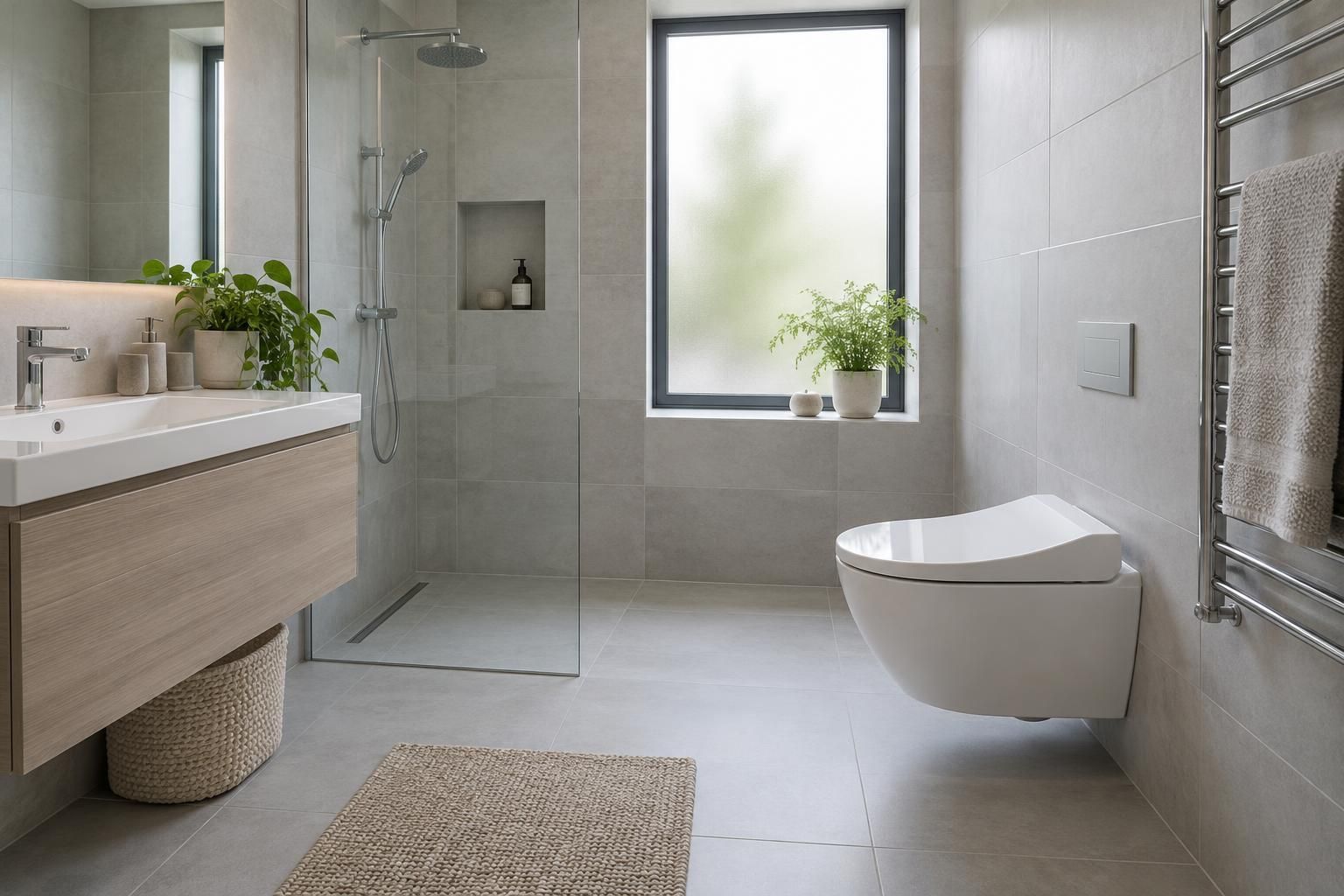
The floor should work with the walls, the vanity and the fixtures, not compete with them. A busy floor pattern suits a plain wall, and a calm floor lets feature tiles or a bold vanity stand out. In a small room, continuing the same floor tile into the shower area makes the space feel larger and simplifies cleaning.
Think about thresholds too. Where the bathroom floor meets a landing or hallway, a neat transition strip stops water spreading and prevents edges from chipping, which is a small detail that extends the life of the whole floor.
Colour matters for daily wear as well. Mid-tone floors with a slight pattern or speckle hide water marks, dust and hair far better than very dark or very pale surfaces. Our guide to bathroom colour schemes shows how to balance these choices.
Choosing Bathroom Flooring With Confidence
Durable bathroom flooring comes down to a waterproof surface, a safe level of grip and a well-prepared base, chosen to suit how your household actually lives. For most homes across Dublin, matt porcelain tiles are the safest all-round choice, with quality luxury vinyl a sensible option where warmth and quick fitting matter.
Before you commit, view samples in the showroom, check them in the light of your own bathroom and ask your fitter how the floor will be waterproofed. If you would like advice on bathroom flooring for your own home, contact The Factory Outlet, call us on (01) 457 9229 or email info@thefactoryoutlet.ie.
What Makes Bathroom Flooring Last in a Busy Home
The best bathroom flooring for a busy Dublin home is one that is fully waterproof, gives reliable grip when wet and keeps its finish under daily wear. Porcelain tiles and quality luxury vinyl suit most households, provided the floor beneath is prepared and sealed correctly.
This guide explains how each material copes with water, footfall and cleaning, what to check before you buy and how the floor interacts with the rest of the room. You can also see bathroom floor finishes in our showrooms before you decide.
How Daily Wear Affects a Bathroom Floor
A bathroom floor takes more punishment than most people expect. It meets wet feet several times a day, steam every morning, cleaning products every week and the occasional dropped bottle or razor. Across a family household that adds up to thousands of small impacts and wet-and-dry cycles each year.
A durable floor therefore needs to do four things. It must stop water reaching the subfloor, resist scratching and staining, stay safe underfoot when wet and clean easily without special products. A floor that is beautiful but fails on any one of these points will look tired long before the rest of the bathroom does.
Water and Steam
Water is the main enemy. It finds its way through failed grout lines, silicone gaps and the edges of a floor where it meets the bath, shower tray or door threshold. Over time it swells timber subfloors and loosens adhesive. This is why the floor surface is only half of the job, and why we always treat waterproofing as part of the renovation. Our article on why waterproofing matters in every bathroom renovation covers that in detail.
Foot Traffic and Cleaning
Floors in family bathrooms and en-suites are cleaned often. Surfaces with deep texture or lots of grout lines hold dirt, while very smooth glossy finishes show every water mark. The right choice balances grip with easy cleaning, and it should still look good after years of mopping, wet towels and the weight of a full bath or vanity unit.
Think also about who uses the room. A busy family bathroom, a guest en-suite and a small cloakroom wet area all wear differently, so the best bathroom flooring for one may be more than you need in another. Matching the material to the level of use avoids overspending on one room and under-specifying another.
Porcelain Tiles for Durable Bathroom Flooring
Porcelain remains the most dependable choice for durable bathroom flooring. It is dense, absorbs very little water and stands up well to scratches, stains and household cleaners. It is also available in a wide range of looks, including stone, concrete, timber and patterned designs, so durability does not mean a plain finish.
Porcelain does have a few points to weigh up:
- Tiles are cold underfoot unless you add underfloor heating, which suits tiled floors very well.
- Grout lines need sealing and occasional cleaning, and larger tiles with narrower joints reduce the amount of grout to maintain.
- Polished finishes can be slippery when wet, so a matt or textured surface is the safer choice for a floor.
- Tiling needs a flat, stable base, and uneven floors must be levelled first.
If you are comparing sizes, finishes and grout colours, our guide to choosing the right tiles for your bathroom goes through them step by step.
Luxury Vinyl and Other Bathroom Floor Options
Good quality luxury vinyl, sold as planks or tiles, is a practical alternative where warmth and a softer feel underfoot matter. It is naturally water resistant, quieter to walk on and quicker to fit than tile. Cheaper sheet vinyl is less forgiving, as it can dent under heavy furniture and may lift at the edges if it is not sealed well.
Natural stone has an undeniable look, but it is porous and needs sealing regularly. Engineered timber and laminate are generally poor matches for wet areas, because moisture at the joints causes swelling and lifting even when the product is sold as water resistant. For most homes we would steer you towards porcelain or a proper vinyl system rather than these materials.
Poured Resin and Microcement
Seamless finishes such as resin and microcement have no grout lines, which makes them easy to wipe clean. They rely heavily on skilled application and a well-prepared base, so the installer matters as much as the product. They also tend to cost more than tile, and any crack in the base can show through, so they suit homeowners who want a clean, modern look and are happy to rely on an experienced fitter.
Slip Resistance and Safety Underfoot
Slip resistance is commonly shown as an R rating on tile packaging, where a higher number means more grip. A bathroom floor should be chosen for grip first and appearance second, especially in a home with children or older relatives. Wet areas such as walk-in showers need more texture than a dry section of floor, and a lightly textured matt porcelain is often a good compromise.
It is worth testing a sample with wet fingers or a wet foot in the showroom. A surface that feels fine when dry can feel very different once soap and water are involved. If someone in the household has limited mobility, our piece on accessible bathroom design explains how flooring, thresholds and grab rails work together.
Underfloor Heating and Subfloor Preparation
Underfloor heating and tiled floors work well together, because the tile spreads and holds the warmth. It is a popular upgrade, and our earlier article covers underfloor heating as a bathroom upgrade. Vinyl can also be laid over some heating systems, but only products approved for that use should be chosen.
Whatever the finish, the subfloor decides how long it lasts. A sound installation usually follows this order:
- Check the subfloor for movement, rot or damp and repair anything that is not sound.
- Level the surface so tiles or vinyl sit flat across the whole room.
- Apply a waterproofing system, especially around the shower and bath.
- Lay the floor covering with the correct adhesive for the material.
- Grout or seal the joints and finish the edges with flexible sealant.
Skipping any of these steps is the most common reason a new bathroom floor fails early. In older houses with timber floors, extra stiffening is often needed before tiling can go ahead.
Matching the Floor to the Rest of the Bathroom
The floor should work with the walls, the vanity and the fixtures, not compete with them. A busy floor pattern suits a plain wall, and a calm floor lets feature tiles or a bold vanity stand out. In a small room, continuing the same floor tile into the shower area makes the space feel larger and simplifies cleaning.
Think about thresholds too. Where the bathroom floor meets a landing or hallway, a neat transition strip stops water spreading and prevents edges from chipping, which is a small detail that extends the life of the whole floor.
Colour matters for daily wear as well. Mid-tone floors with a slight pattern or speckle hide water marks, dust and hair far better than very dark or very pale surfaces. Our guide to bathroom colour schemes shows how to balance these choices.
Choosing Bathroom Flooring With Confidence
Durable bathroom flooring comes down to a waterproof surface, a safe level of grip and a well-prepared base, chosen to suit how your household actually lives. For most homes across Dublin, matt porcelain tiles are the safest all-round choice, with quality luxury vinyl a sensible option where warmth and quick fitting matter.
Before you commit, view samples in the showroom, check them in the light of your own bathroom and ask your fitter how the floor will be waterproofed. If you would like advice on bathroom flooring for your own home, contact The Factory Outlet, call us on (01) 457 9229 or email info@thefactoryoutlet.ie.